
If you’ve been sewing for a while, you’ve probably noticed those beautifully finished seams on ready-to-wear garments and wondered how to achieve the same professional look. The answer lies in a serger, also known as an overlock machine. While regular sewing machines can create basic seams, a serger takes your sewing to the next level by trimming, sewing, and finishing edges all in one pass.
For beginners, choosing the right serger can feel overwhelming. These machines look more complicated than standard sewing machines, with multiple thread cones and mysterious dials. But don’t worry—modern beginner-friendly sergers are designed with ease of use in mind, featuring color-coded threading guides, automatic tension systems, and intuitive controls.
In this comprehensive guide, we’ll review the best budget serger options and beginner overlock machine models that deliver professional results without the professional price tag or learning curve.
What Makes a Serger Great for Beginners?
Before diving into specific models, let’s identify the key features that make a serger beginner-friendly:
Easy Threading Systems
Threading a serger is often cited as the most intimidating aspect for newcomers. The best sergers for beginners feature:
- Color-coded threading paths that match thread guides to cones
- Numbered threading diagrams printed directly on the machine
- Lower looper threaders or air-jet threading systems
- Lay-in threading for upper loopers that doesn’t require tweezers
Adjustable Differential Feed
Differential feed prevents fabric from stretching or puckering as it moves through the machine. Look for models with easily adjustable differential feed ratios, typically ranging from 0.7 to 2.0, which allows you to work with everything from delicate knits to stable wovens.
Reliable Stitch Quality
A good beginner overlock machine should produce consistent, balanced stitches right out of the box with minimal tension adjustments. Automatic or semi-automatic tension systems take the guesswork out of setup.
Affordable Price Point
The best budget serger models for beginners typically range from $200 to $500. This price range offers solid construction, essential features, and reliability without overwhelming newcomers with advanced functions they won’t use right away.
Top Serger Machines for Beginners
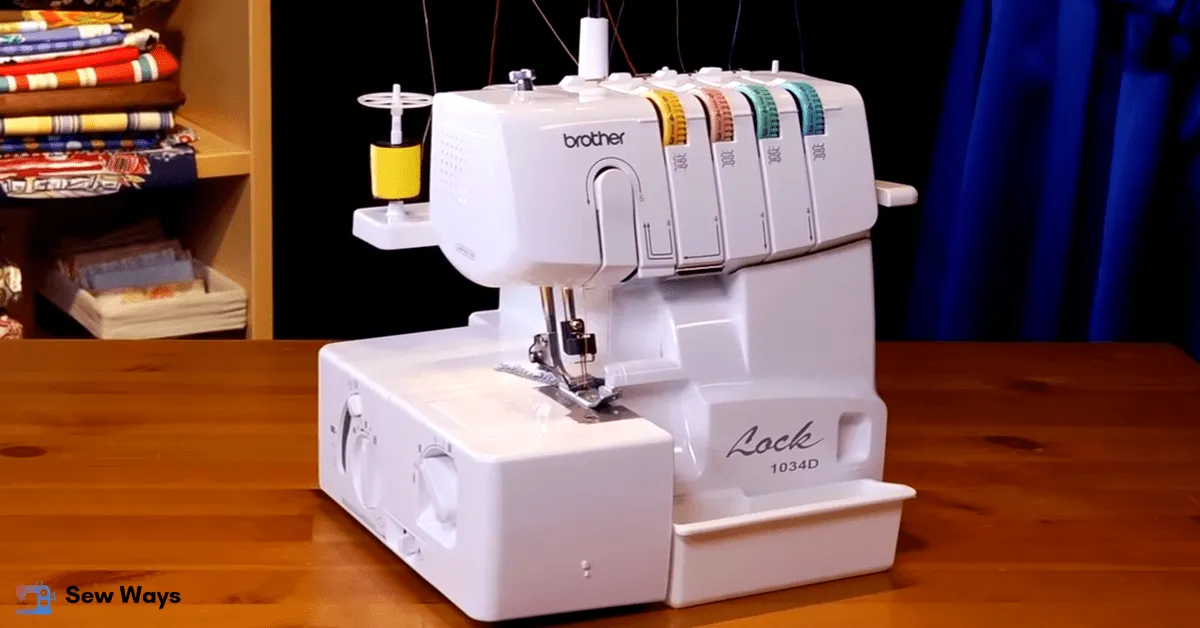
1. Brother 1034D: Best Overall Value
Price Range: $200-$250
The Brother 1034D consistently ranks as the most popular entry-level serger, and for good reason. This 3/4 thread overlock machine offers exceptional value with features typically found on more expensive models.
Key Features:
- Easy lay-in threading with color-coded guides
- Differential feed (0.7-2.0 ratio)
- 1,300 stitches per minute
- Free arm for hemming sleeves and pant legs
- Snap-on presser feet for quick changes
What We Love: The Brother 1034D threads more easily than many sergers twice its price. The color-coded system and clear printed diagrams make the process straightforward, even for complete beginners. The machine runs quietly and produces professional-quality stitches on both knit and woven fabrics.
Considerations: This model doesn’t include a 2-thread capability, which limits some rolled hem options. However, the 3-thread rolled hem it does produce is beautiful and sufficient for most beginner projects.
Best For: Budget-conscious sewists who want a reliable, no-frills serger that handles everyday serging tasks with ease.
2. Juki MO654DE: Best for Knit Fabrics
Price Range: $300-$350
Juki is renowned in the sewing industry for building commercial-grade machines, and the MO654DE brings that quality to home sewists at an affordable price point.
Key Features:
- 2/3/4 thread capability
- Automatic rolled hem conversion
- Differential feed (0.5-2.25 ratio)
- 1,500 stitches per minute
- Stainless steel knife blades
What We Love: The wider differential feed range makes this serger exceptional for knit fabrics. The automatic rolled hem conversion is activated with a simple lever flip—no plate changes or manual adjustments required. The machine’s industrial heritage shows in its solid construction and powerful motor.
Considerations: Threading takes a bit more practice than the Brother 1034D, though it’s still manageable for beginners willing to invest a little time in learning their machine.
Best For: Sewists who primarily work with knit fabrics, activewear, or stretchy materials and want a machine that will grow with their skills.
3. Singer 14SH754: Best Feature Set Under $300
Price Range: $250-$300
Singer brings over a century of sewing machine expertise to the serger market with the 14SH754, packing impressive features into an affordable package.
Key Features:
- 2/3/4 thread capability
- Built-in rolled hem
- Adjustable stitch length (2-4mm) and width (3-7mm)
- Differential feed (0.7-2.0 ratio)
- 1,300 stitches per minute
- Lay-in threading with color-coded guides
What We Love: The versatility of 2/3/4 thread options opens up more creative possibilities, from delicate rolled hems to sturdy 4-thread safety seams. The stitch length and width adjustments are clearly marked and easy to modify, allowing beginners to experiment and learn what works best for different fabrics.
Considerations: Some users report the threading diagram could be clearer, particularly for the lower looper. However, once you’ve threaded it a few times, the process becomes second nature.
Best For: Beginners who want room to grow and experiment with different stitch types and applications.
4. Baby Lock Vibrant: Best Premium Option for Beginners
Price Range: $400-$500
If your budget allows, the Baby Lock Vibrant offers premium features that make learning to serge genuinely enjoyable.
Key Features:
- Jet-Air Threading™ system for lower looper
- 2/3/4 thread capability with easy conversion
- Advanced differential feed
- 1,300 stitches per minute
- Extra-bright LED lighting
- Included accessory kit with 12 presser feet
What We Love: The Jet-Air Threading system is a game-changer. Instead of manually threading the lower looper (traditionally the most difficult thread path), you simply place the thread in position and push a button—air pressure does the rest. The brilliant LED lighting illuminates your work area beautifully, reducing eye strain during longer sewing sessions.
Considerations: This is the priciest option on our list, but the time saved on threading and the frustration eliminated make it worth considering if you can stretch your budget.
Best For: Beginners who want the easiest possible learning experience and plan to use their serger frequently for garment construction.
5. Janome 8002D: Best for Quiet Operation
Price Range: $350-$400
Janome’s reputation for quality construction shines in the 8002D, a solid workhorse that runs remarkably quietly.
Key Features:
- 3/4 thread capability
- Color-coded threading
- Differential feed (0.7-2.0 ratio)
- 1,300 stitches per minute
- Snap-on presser feet
- Built-in rolled hem
What We Love: This serger operates noticeably quieter than most models in its class, making it ideal if you sew in shared spaces or during early mornings and late evenings. The stitch quality is consistently excellent across different fabric types, and the machine feels sturdy and well-built.
Considerations: Like the Brother 1034D, this model doesn’t offer 2-thread capability. The threading process, while color-coded, requires more manual dexterity than some competing models.
Best For: Apartment dwellers or anyone who values quiet operation without sacrificing quality and reliability.
Essential Serger Features Explained
Understanding these key features will help you make an informed decision when selecting your first serger.
Thread Configuration Options
Sergers use multiple threads simultaneously to create their distinctive stitches:
- 2-thread: Creates a flatlock stitch or narrow rolled hem; uses less thread
- 3-thread: The most common configuration; creates a balanced overlock stitch
- 4-thread: Provides extra strength with a safety stitch; ideal for seaming and finishing in one pass
Beginner-friendly machines typically offer 3/4 thread capability, with some including 2-thread options for more versatility.
Differential Feed Ratio
The differential feed system uses two sets of feed dogs that can move at different speeds relative to each other:
- Ratio below 1.0 (0.7-0.9): Stretches fabric slightly; prevents puckering on lightweight materials
- Ratio at 1.0: Neutral setting; moves fabric normally
- Ratio above 1.0 (1.5-2.0): Compresses fabric; prevents stretching on knits and prevents lettuce-edging
Most beginner projects work well with the differential feed set between 1.0 and 1.5.
Stitch Length and Width
- Stitch length: Typically adjustable from 1-4mm; shorter for rolled hems, longer for decorative stitching
- Stitch width: Usually 3-7mm range; affects how much fabric is trimmed and how wide the finished seam appears
Knife System
The built-in knife blade trims excess fabric as you serge, creating clean, professional edges. Most beginner sergers feature:
- Upper and lower blades that work together like scissors
- Movable or disengageable knives for situations where you don’t want to trim (like flatlock decorative stitching)
- Replaceable blades that maintain cutting quality over time
Getting Started with Your New Serger
Once you’ve chosen your beginner overlock machine, follow these steps for success:
1. Thread Your Machine Slowly
Don’t rush your first threading. Follow the color-coded guides carefully, checking each thread path twice before moving to the next. Take photos of the correctly threaded machine from multiple angles for future reference.
2. Test on Fabric Scraps
Before serging your actual project, create a test sample using the same fabric type. Adjust differential feed and tension settings until you achieve balanced, attractive stitches.
3. Practice Essential Techniques
Master these fundamental skills:
- Starting and stopping without thread bunching
- Turning corners by raising the presser foot and pivoting
- Securing thread tails by chaining off and using a tapestry needle to weave ends
- Adjusting tension to balance the stitch formation
4. Maintain Your Machine
Regular maintenance keeps your best budget serger running smoothly:
- Brush out lint from the loopers and feed dogs after each project
- Oil the machine according to manufacturer recommendations
- Replace needles every 8-10 hours of serging or when switching fabric types
- Change blades when they become dull and stop cutting cleanly
When to Use a Serger vs. Regular Sewing Machine
Understanding when to use each machine helps you work more efficiently:
Use Your Serger For:
- Finishing raw edges on seam allowances
- Creating stretchy seams on knit garments
- Making rolled hems on lightweight fabrics
- Constructing activewear and swimwear
- Adding decorative edges with specialty threads
- Attaching elastic or binding
Use Your Regular Sewing Machine For:
- Topstitching visible on the garment exterior
- Installing zippers
- Creating buttonholes
- Sewing precise straight or decorative stitches
- Quilting and patchwork
- Any technique requiring backward stitching
Many sewists find that using both machines in tandem produces the best results. Serge your seam allowances for a professional finish, then use your regular machine for topstitching and construction details.
Affordable Serger Reviews: What to Expect
When reading affordable serger reviews, keep these realistic expectations in mind:
Budget Sergers Excel At:
- Standard 3/4 thread overlocking
- Seam finishing on everyday fabrics
- Basic garment construction
- Reliable, consistent performance with proper maintenance
Budget Sergers May Struggle With:
- Extremely thick or heavy materials (like upholstery weight fabric)
- Extended high-speed operation without breaks
- Complex cover stitching (requires a separate cover stitch machine)
- Very fine thread weights on delicate specialty fabrics
Most beginner sewists find that affordable models handle 95% of home sewing projects beautifully. As your skills advance and your needs become more specialized, you can always upgrade to a higher-end model and keep your first serger as a backup or for workshops.
Making the Investment Worthwhile
A serger represents a significant investment for most beginners. Maximize the value of your purchase by:
Taking a Class or Workshop
Many fabric stores and sewing studios offer serger basics classes. Even a single 2-3 hour session can dramatically shorten your learning curve and boost your confidence.
Joining Online Communities
Facebook groups, Reddit’s sewing communities, and specialized forums offer troubleshooting help, project inspiration, and support from experienced serger users who remember what it’s like to be a beginner.
Starting with Simple Projects
Build your skills gradually with beginner-friendly serger projects:
- T-shirts in comfortable knit fabrics
- Simple pull-on skirts
- Baby clothes (small and quick to complete)
- Cloth napkins with rolled hems
- Scarves with decorative edges
Investing in Quality Thread
Your serger uses significantly more thread than a regular sewing machine. While it’s tempting to buy the cheapest thread available, poor quality thread causes tension problems, breakage, and lint buildup. Mid-range polyester or poly-blend threads designed for sergers offer the best balance of quality and value.
The Bottom Line
The best budget serger for you depends on your specific needs, fabric preferences, and budget constraints. Here’s our quick recommendation guide:
- Best overall value: Brother 1034D offers solid performance at the lowest price point
- Best for knits: Juki MO654DE handles stretch fabrics beautifully
- Most versatile: Singer 14SH754 provides 2/3/4 thread options for creative exploration
- Easiest to learn: Baby Lock Vibrant eliminates threading frustration
- Quietest operation: Janome 8002D won’t disturb household peace
Any of these beginner overlock machine options will serve you well as you develop your serging skills. Focus on finding a model that fits your budget and offers the features most important to your sewing style.
Remember, the “perfect” serger is the one you’ll actually use. Choose a model that feels approachable, invest time in learning how it works, and you’ll wonder how you ever sewed without one. The professional-looking seam finishes, time savings, and creative possibilities make a serger one of the most rewarding additions to any sewing room.